
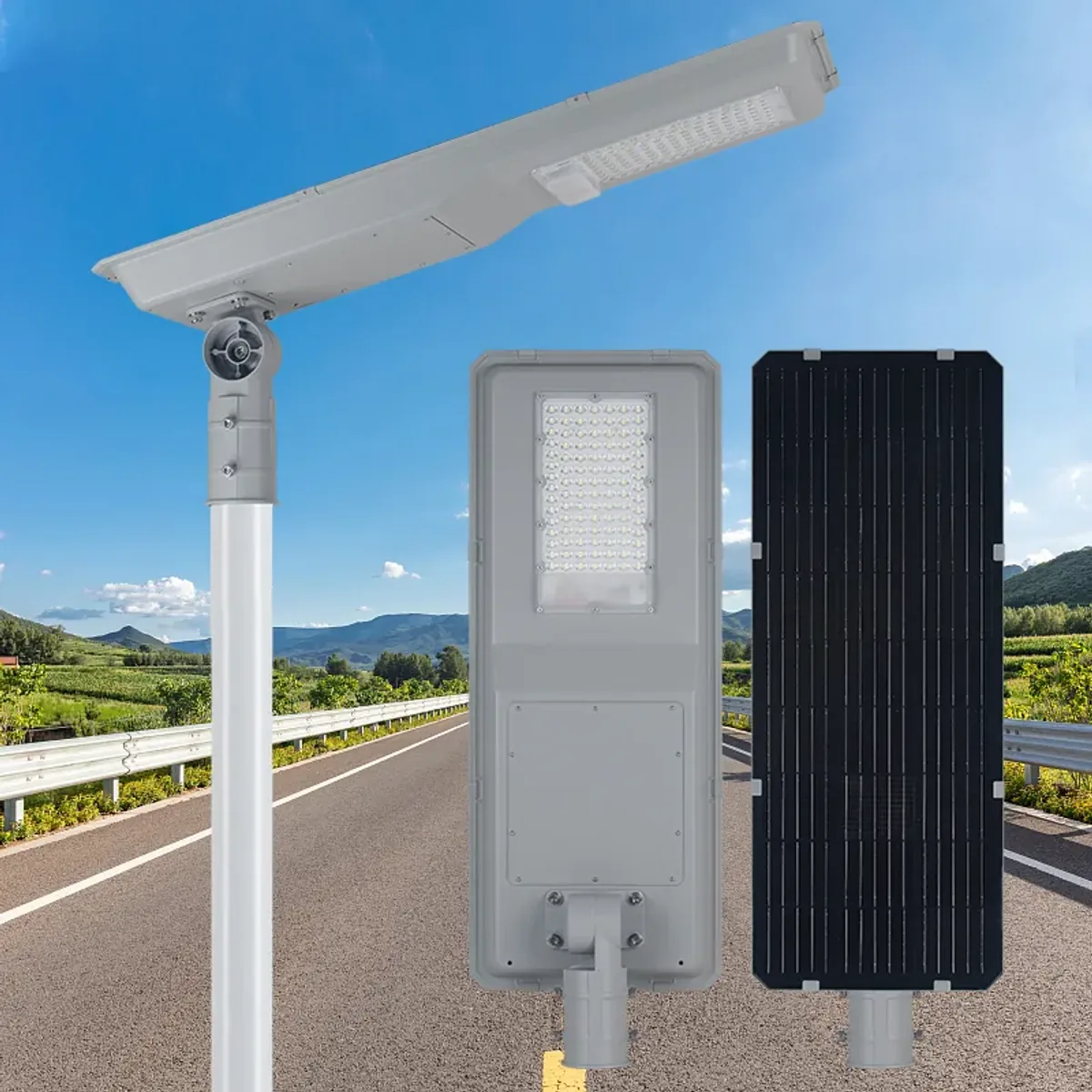
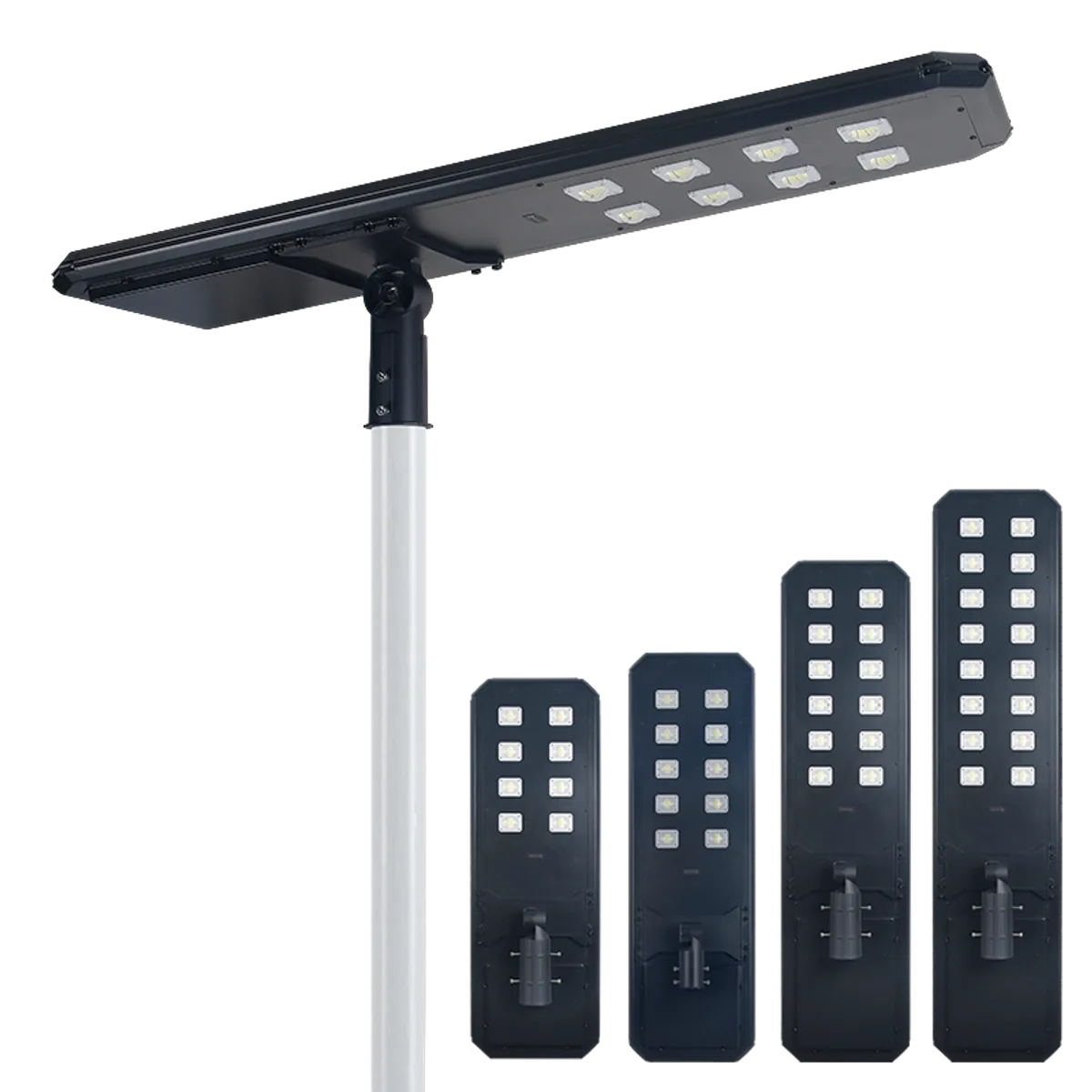
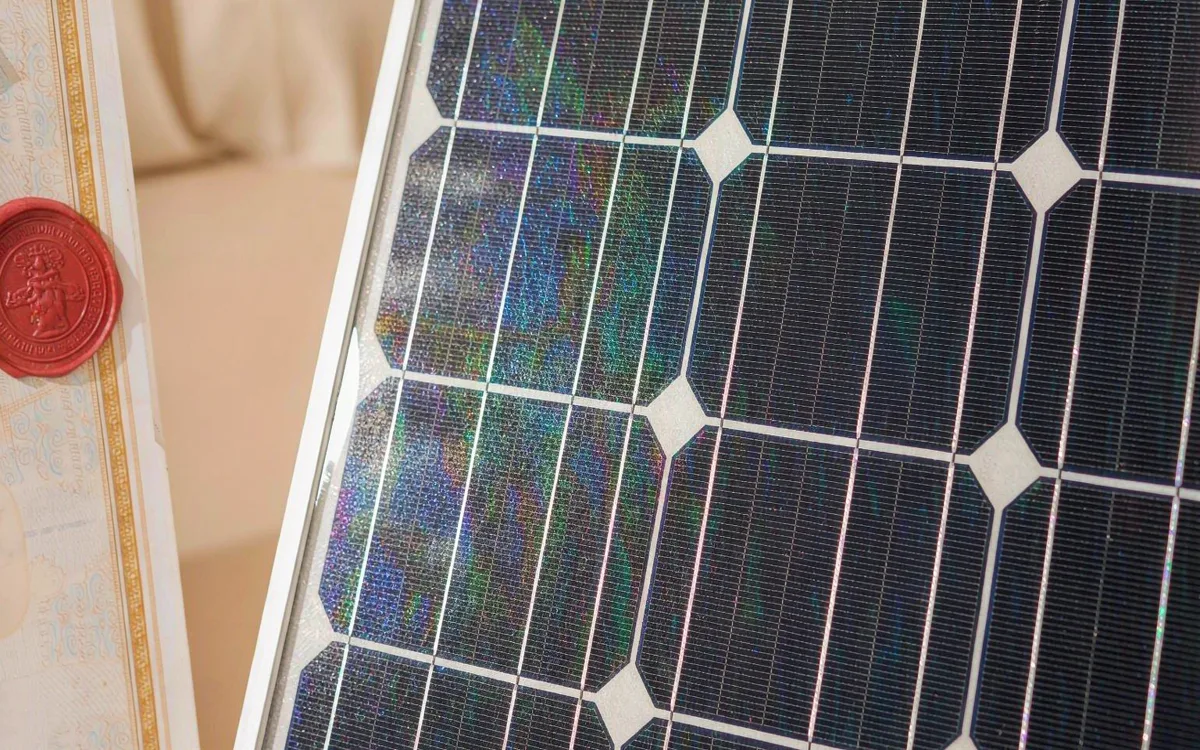
A certificate is not a sales pitch. It is a piece of paper — or, increasingly, a PDF — issued by a named body that has actually tested your product. The number of B2B solar street light orders that fall apart at the pre-shipment inspection stage because a buyer pulled a certificate number and found nothing on the issuing body’s register is higher than most suppliers like to admit.
This guide walks through the seven certificates we currently hold on our solar lighting ranges. For each one, we name the issuing body (the place you can verify the certificate, not the mark itself), the standard tested against, the specific series covered, and the markets where it is required. We finish with the three things these certificates do not cover — because honesty about the limits of a certificate is more useful than padding the list.
If you are evaluating us for a tender or a compliance checklist, the live register of certificates is on our certifications page. That page is updated within 30 days of any new certificate or renewal.
The seven certificates we hold
The full list, copied directly from our internal certifications data file:
| Certificate | What it proves | Issuing body | Standard(s) tested | Series covered |
|---|---|---|---|---|
| CE — EMC | Electromagnetic compatibility | Zhongshan AOCE Testing Technology Co., Ltd. | EN IEC 55015 · EN 61547 | TR-30 / TR-48 / TR-80 / TR-100 |
| CE — LVD | Electrical safety (low voltage) | Zhongshan AOCE Testing Technology Co., Ltd. | EN 60598-2-3 · EN IEC 60598-1 | TR-30 / TR-48 / TR-80 / TR-100 |
| RoHS | Restriction of hazardous substances | Shenzhen AZT Technology Co., Ltd. | IEC 62321 series · EU 2011/65 + (EU) 2015/863 | TR-88-C and TR series (issued July 2025) |
| PSE | Japan electrical appliance compliance | Zhongshan AOCE Testing Technology Co., Ltd. | PSE EMC Regulations 2017 · J55015 (H29) | MJ-100W / MJ-150W / MJ-200W (flood lights) |
| FCC | US electromagnetic compliance | Global Testing Group (Guangdong Global Testing Technology Co., Ltd.) | FCC 47 CFR Part 15 Subpart B | BW-B series flood light, trade mark DONTA (issued May 2026) |
| CCC | China compulsory product certification | CQC — China Quality Certification Centre | GB 17625.1 · GB/T 17743 · GB 7000.1 | Fixed general-purpose luminaires, valid 22 Dec 2022 – 21 Dec 2027 |
| ISO 9001 | Quality management system | Guangdong Quality Testing CTC Certification Co., Ltd. | GB/T 19001-2016 / ISO 9001:2015 | R&D, manufacture and sales of outdoor lights, valid 15 Apr 2026 – 09 Apr 2029 |
Read the issuing body column, not the certificate code. The mark tells you the test family. The body tells you where to verify. Anyone can print “CE” on a label; not everyone can put you in touch with the laboratory that did the test.
Which certificates does your market require?
The matrix below maps the markets we ship to most often against the certificate they care about. If you are looking at this list from a market we have not yet served, the safest baseline is CE (EMC + LVD) + RoHS — they are accepted as a compliance baseline in most non-EU jurisdictions even where they are not legally required.
| Target market | Required for solar street lights | Required for solar flood lights | Notes |
|---|---|---|---|
| European Union (27 countries) | CE-EMC + CE-LVD + RoHS | Same | CE is two directives; both are required. RoHS is enforced separately. |
| United Kingdom | CE-EMC + CE-LVD + RoHS accepted (UKCA also possible) | Same | Post-Brexit, UKCA is the local mark but CE is still widely accepted. |
| United States | FCC (47 CFR Part 15) | Same | Required for any device that can emit RF. |
| Canada | IC (Industry Canada) — we do not currently hold this | — | Talk to us about parallel testing against IC RSS-Gen. |
| Japan | PSE (if the device plugs into mains) | PSE required for MJ series | Note: PSE in our register covers flood lights only, not street lights. Street light projects in Japan need a separate conversation. |
| Australia / New Zealand | RCM (we do not currently hold this) | — | EESS registration under AS/NZS 4417. We can arrange per order. |
| China (domestic) | CCC | CCC (when applicable) | Required for fixed general-purpose luminaires. |
| Middle East, Africa, Southeast Asia, Latin America | Most accept CE-EMC + CE-LVD + RoHS at customs; some require a local importer of record. | Same | Always confirm with your local authority; rules change yearly. |
A common mistake we see in first-time B2B orders: a buyer in Saudi Arabia asks for a “UL certificate” because their tender template listed it. UL is the United States testing body (Underwriters Laboratories) — Saudi Arabia does not require UL. They accept IEC-based CE + a SASO IECEE recognition certificate. Always check with the destination country’s standards body, not the tender template writer.
CE is two directives, not one
CE is the most misunderstood mark in our register. CE is not a single certificate. The CE mark is a self-declaration that the product meets all applicable EU directives. For our solar street lights, the applicable directives are:
- EMC (electromagnetic compatibility) — verified by the AOCE EMC test report. Proves the light does not emit RF noise that would interfere with other electronics, and that it tolerates a defined level of external RF.
- LVD (low voltage directive) — verified by the AOCE LVD test report. Proves the light is safe to touch, that insulation is adequate, and that under fault conditions the user is protected from electric shock.
Some suppliers show you a CE mark and only one of these two test reports. Ask for both. We publish both on the certifications page with the test report numbers — you can request the full PDF reports by emailing our sales team with your project name.
What these certificates do not cover
Three limits worth knowing before you write a certificate into a tender:
1. There is no third-party IP66 certificate. IP rating testing is done in-house on the waterproof test chamber you can see in our factory tour video and our lab photos. The IP test is real — every batch of all-in-one units is water-sprayed and vacuum-tested before packing — but the IP66 figure is our own attestation, not a third-party certificate. If a tender requires an IP66 test report from an accredited lab, we can arrange parallel testing through the same laboratories that handle our CE-LVD work. Talk to us early; the lead time is roughly 3–4 weeks per batch.
2. RoHS is about materials, not performance. The RoHS directive restricts ten substances (lead, mercury, cadmium, hexavalent chromium, and four phthalates, plus the four PBB/PBDE flame retardants). A RoHS certificate proves the bill of materials is below the substance limits. It says nothing about whether the light is bright, waterproof, or long-lasting. A perfectly compliant RoHS fixture can still fail after one winter. Use RoHS as a gate, not a quality verdict.
3. ISO 9001 covers the system, not the product. Our ISO 9001:2015 certificate is issued by Guangdong Quality Testing CTC Certification Co., Ltd. and covers the R&D, manufacture and sales process for our outdoor lights. It means an auditor has checked that we have written procedures for incoming inspection, batch testing, corrective action, and document control. It does not mean every product that leaves the factory has been individually certified. ISO 9001 is necessary infrastructure; it is not a substitute for an actual product test certificate.
A fourth, related point that is sometimes asked: we do not hold TÜV, SGS, or BSI certificates. This is a deliberate choice, not a gap. Those three bodies are dominant in Western Europe and command a price premium that is not always justified for the test families we need. We use AOCE, AZT, GTG, CTC and CQC — all accredited Chinese laboratories whose test reports are accepted by the EU and US authorities under mutual recognition arrangements. If your tender specifically requires TÜV or SGS (some German municipal tenders do), we can arrange parallel testing; the lead time is usually 4–6 weeks and the cost is itemized separately.
How to verify a certificate in three steps
If a supplier hands you a certificate PDF, do this before you trust it:
- Find the issuing body name on the certificate (not the mark, not the supplier’s name). For our certificates, the bodies are: Zhongshan AOCE, Shenzhen AZT, Global Testing Group (GTG), CQC, and Guangdong Quality Testing CTC.
- Search that body’s own online register for the certificate number. A body that has never heard of the supplier is worse than no certificate at all. Most Chinese testing bodies (AOCE, AZT, GTG, CTC) host their registers on their company websites; CQC’s register is at cqc.com.cn.
- Check the scope line. The certificate’s scope says exactly which product series the test covers. Our CE-EMC scope, for example, reads “LED solar street light — TR-30 / TR-48 / TR-80 / TR-100 series”. If you are buying a TR-200 unit, that CE-EMC certificate does not cover it. If a supplier’s certificate lists “LED lighting fixtures (generic)”, ask them to amend it to your specific model number before you accept the order.
We help with the verification step. Send your incoming inspector the certificate number and the issuing body, and we will provide the test report PDF and the corresponding entry in the body’s register.
Frequently asked questions
Do I need PSE certification to import solar street lights into Japan? Not for solar street lights — our PSE certificate covers the MJ series of solar flood lights only (MJ-100W, MJ-150W, MJ-200W). If you are bringing a container of TR series street lights into Japan, you need a different conversation about the electrical safety framework. Japan is a complicated import market for outdoor lighting; the Japanese Electrical Appliance and Material Safety Act distinguishes between “specified electrical appliances” and “non-specified”, and the documentation pathway depends on which category the fixture falls into.
Is a single CE certificate enough for the EU? No. CE is a self-declaration against all applicable EU directives. For our solar street lights, that means at minimum CE-EMC and CE-LVD, plus RoHS. We hold all three. If a supplier hands you a single “CE certificate” with no test report, ask to see the underlying EMC and LVD test reports — they will have different report numbers and different issuing body stamps.
Do you have TÜV, SGS, or BSI certificates? No, and we are transparent about it. We use accredited Chinese laboratories (AOCE, AZT, GTG, CTC, CQC) whose test reports are accepted under the EU and US mutual recognition arrangements. If your tender specifically requires TÜV or SGS (some German municipal tenders do), we can arrange parallel testing; the lead time is 4–6 weeks and the cost is itemized separately. Pretending we have certificates we do not hold is a fast path to a failed inspection at destination — see our scams article for examples of how this typically ends.
Is there an IP66 certificate for the solar street light? No third-party IP66 certificate. IP rating testing is done in-house on the waterproof test chamber in our factory, batch by batch. We publish the test method and a sample test record on request. If your tender requires an IP66 test report from an accredited lab, we can arrange parallel testing through the same labs that handle our CE work — talk to us early, lead time is 3–4 weeks.
Does ISO 9001 mean every product is individually tested? No. ISO 9001 is a quality management system certificate. It means our factory has audited processes for incoming inspection, batch testing, and corrective action — the system is the certificate, not any individual product. For a product-specific certificate, you need CE, FCC, PSE, CCC, or RoHS — depending on your market.
How long are these certificates valid? Each certificate has its own validity window printed on the document. Our current ISO 9001 runs to April 2029, our CCC runs to December 2027, and our CE/RoHS/PSE/FCC certificates are issued against current standards and renewed when the standard is updated or every 3–5 years. The certifications page always shows the most current document.
Working with our factory on a tender
If you are writing our certificates into a tender document or a pre-shipment inspection checklist, the most reliable path is to:
- Send us the tender document 4–6 weeks before the bid deadline. Most certificate questions can be answered with a PDF attachment. If the tender requires a certificate we do not currently hold, we can usually arrange parallel testing.
- Plan the inspection around batch testing, not document review. A pre-shipment inspection that watches us run an EMC scan and a waterproof test on your actual production batch is worth more than a folder of certificates.
- For a 40HQ container order, ask for batch test reports. Every production batch we ship has its own internal batch test record (photometric, waterproof, drop). We attach these to the shipping documents.
To start a conversation about certificates for a specific tender, the fastest path is the contact form with the tender document attached. Our engineering team replies within one working day (Asia/Shanghai time) with a compliance check against your destination market.
— Xiuben Engineering Team, Zhongshan
中山修本照明的工程与采购团队。我们在 12,000m² 平方米工厂设计、生产并出口太阳能路灯、泛光灯和花园灯至全球 国家。