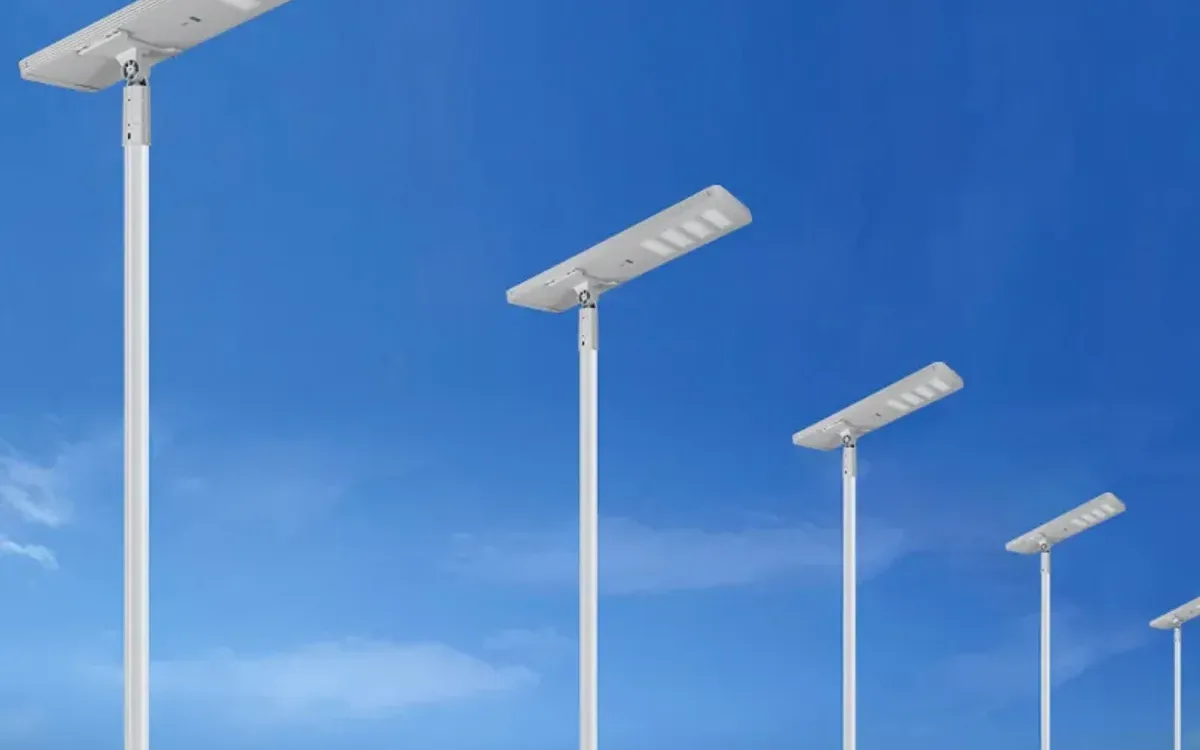

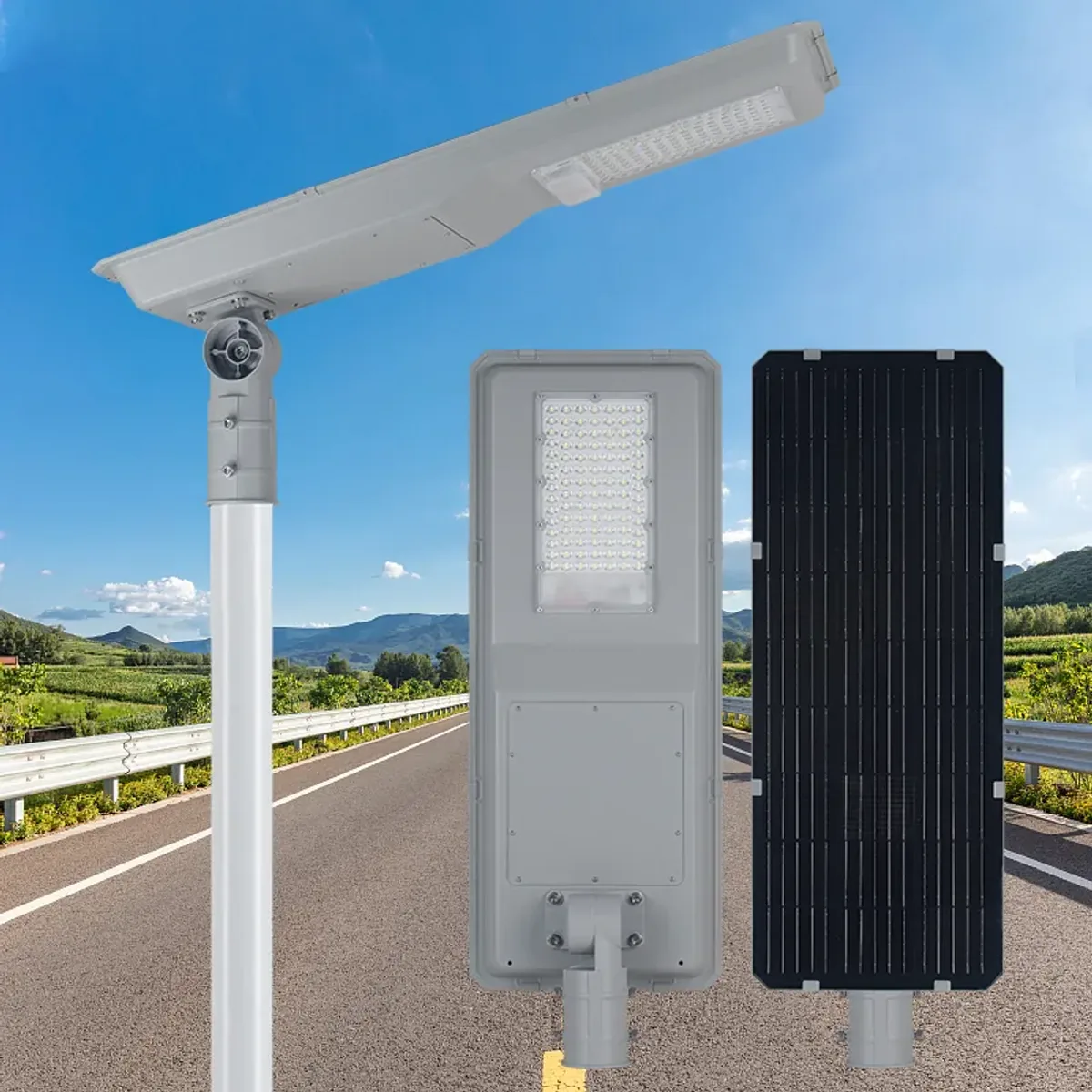
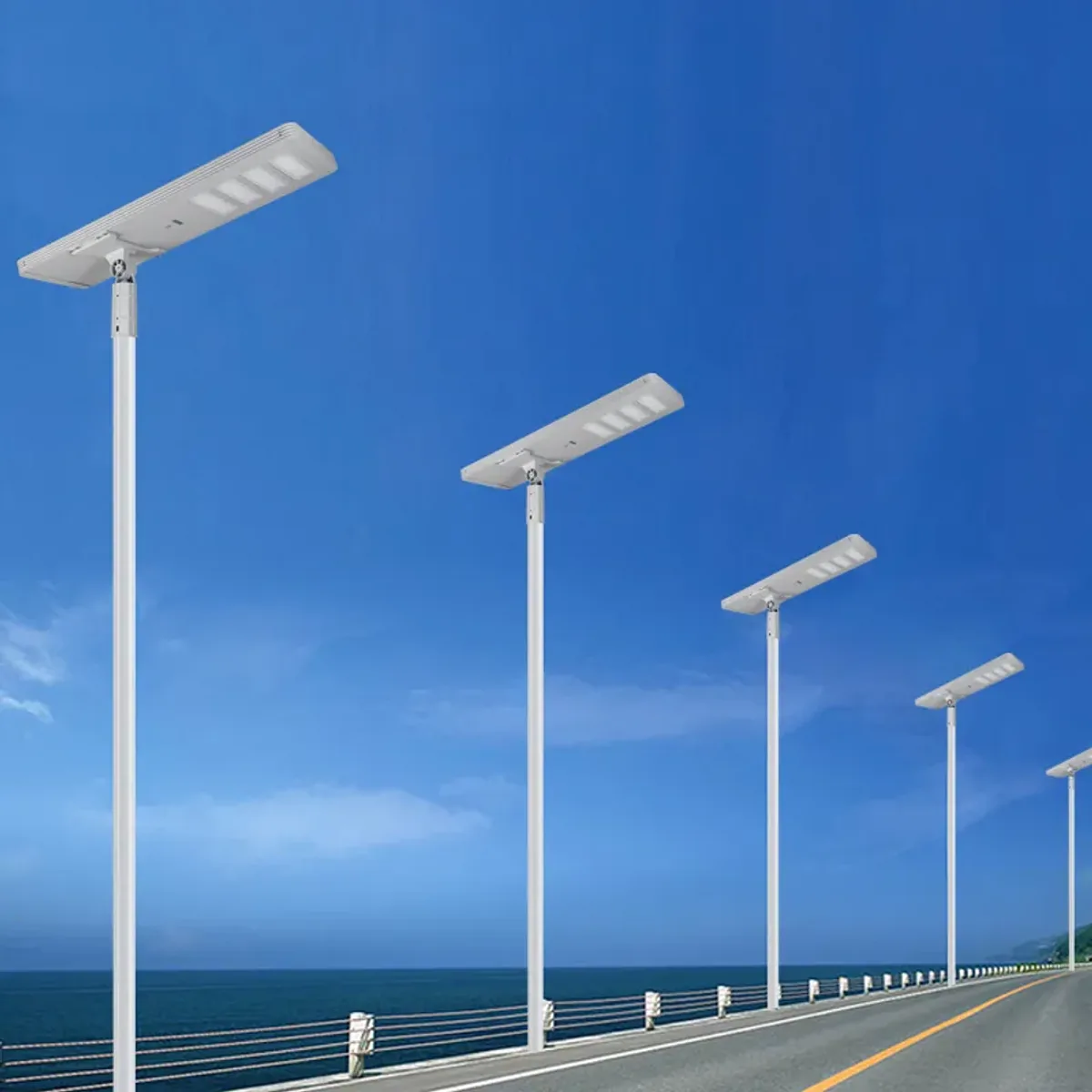
Four rule changes landed in 2026 that change what a compliant solar light order looks like — and three of them are not about the light itself.
- EU packaging. Regulation (EU) 2025/40, the Packaging and Packaging Waste Regulation, applies from 12 August 2026. The carton, foam, tape and pallet around your fixtures are now regulated articles in their own right, each with a substance limit, a technical file and a Declaration of Conformity.
- EU batteries. Regulation (EU) 2023/1542 reaches the pack inside the fixture: its category, its CE marking, what its label must say, and — from 18 February 2027 — who is allowed to take it out.
- US tariffs. The Section 301 duty on non-electric-vehicle lithium-ion batteries moved from 7.5% to 25% on 1 January 2026.
- Air freight. The 67th edition of the IATA Dangerous Goods Regulations took effect on 1 January 2026.
None of these require a different light. All of them change what you should ask for before you pay a deposit. The rest of this page sets out what each rule actually says, which ones apply to a solar street light at all, and the document check to run on every purchase order.
The changes at a glance
The comparison below is the short version. Each line is explained further down, together with the dates that are still moving.
| Change | Instrument | Applies from | Who it lands on | First action |
|---|---|---|---|---|
| EU packaging duties | Regulation (EU) 2025/40 (PPWR) | 12 August 2026 (in force 11 February 2025) | Anyone placing packaged goods on the EU market | Request the packaging Declaration of Conformity and technical file |
| EU battery label | Regulation (EU) 2023/1542, Article 13 | Nominal 18 August 2026 — see the caveat below | Whoever places the battery on the EU market, normally your importer | Collect the pack nameplate data: chemistry, capacity in Wh, mass, hazardous substances |
| EU responsible person | Regulation (EU) 2023/988 (GPSR) | 13 December 2024 | Consumer products sold into the EU | An EU postal and email address on the product or its packaging |
| US battery tariff | Section 301, 89 FR 76581 | 1 January 2026 for HTSUS 8507.60.0020 | US importers of lithium-ion cells and packs | Rebuild the landed-cost model at the new rate |
| Air freight lithium rules | IATA DGR, 67th edition | 1 January 2026 | Any air shipment containing lithium batteries | UN 38.3 test summary, packing instruction, state of charge |
| Luminaire safety standard | IEC 60598-1:2024, edition 10 | Published 6 November 2024 | New luminaire designs | Check which edition the test report behind the certificate cites |
EU packaging: the carton is now a regulated article
The PPWR replaced the 1994 Packaging and Packaging Waste Directive (94/62/EC). Because it is a regulation and not a directive, it applies identically in all 27 member states with no national variation. It entered into force on 11 February 2025 and applies generally from 12 August 2026.
What applies from 12 August 2026
- Substance limits. Lead, cadmium, mercury and hexavalent chromium combined must not exceed 100 mg/kg in any packaging.
- PFAS limits. These apply to food-contact packaging. A solar light carton is not food-contact packaging, so this normally falls outside your file — confirm with the packaging supplier rather than assuming either way.
- Conformity file. An EU Declaration of Conformity for each packaging type, with technical documentation behind it. Single-use packaging documentation is kept for 5 years, reusable packaging for 10.
- Extended Producer Responsibility. Registration and reporting in each member state where the packaging is first placed on the market, plus an authorised representative if the producer is outside the EU.
- Recyclability. Packaging placed on the EU market must be recyclable, with design-for-recycling grades phasing in in later stages; the assessment standard is still being written.
What this means for a solar light order
A pallet of solar street lights travels inside a shipping carton, foam, tape, stretch film and a wooden pallet. Every one of those items is packaging under the PPWR. The buyer’s importer, not the Chinese factory, is normally the producer for EPR purposes — so that cost lands on your side of the transaction, and it is counted per member state.
What to ask before you order
- A packaging specification that names each material and its weight.
- Heavy-metal test data, or a supplier declaration, against the 100 mg/kg limit.
- Confirmation that a Declaration of Conformity exists for each packaging type, and who holds the technical file.
- On your own side: an EPR registration number in each destination country, or the name of the producer responsibility organisation your importer uses.
EU batteries: the pack inside the fixture is in scope
The Battery Regulation replaced the 2006 Batteries Directive. It entered into force on 17 August 2023 and applies from 18 February 2024, with obligations phasing in through 2036 (the old directive is repealed from 30 June 2027). It applies to any battery placed on the EU market, wherever it was made, and it does not care that the battery is sold as part of a lamp.
First question: which of the five categories is your pack?
Article 3 sorts every battery into one of five groups, and the group decides the obligations. Two values do most of the work: mass in kilograms, and energy in kilowatt-hours.
| Category | Definition in Article 3 | Where a solar light falls |
|---|---|---|
| Portable, Art. 3(1)(9) | A battery that is sealed, weighs 5 kg or less, is not designed specifically for industrial use and is neither an electric vehicle battery, an LMT battery, nor an SLI battery | The cell inside a garden light; a small wall-light pack |
| Industrial, Art. 3(1)(13) | A battery specifically designed for industrial uses, intended for industrial uses after preparation for repurposing or repurposing, or any other battery that weighs more than 5 kg and that is neither an electric vehicle battery, an LMT battery, nor an SLI battery | A high-capacity 12.8 V LiFePO4 pack on a road project |
| LMT, Art. 3(1)(11) | Sealed, 25 kg or less, specifically designed to provide electric power for the traction of wheeled vehicles, and not an electric vehicle battery | Not applicable to solar lighting |
The practical consequence: a garden light cell is portable. A street-light pack can be an industrial battery purely because of its weight — the third limb of the industrial definition catches any battery above 5 kg that is not an EV, LMT or SLI battery, with no industrial declaration required and no industrial use case needed. Ask for the pack nameplate mass and its energy in kWh before you order, because those two values decide whether the battery passport and the user-replaceability rule apply to you at all.
Battery passport and carbon footprint: who needs them
- Digital battery passport (Article 77). The QR code is what reaches it. Article 13(6) requires the QR code on the battery to give access to the battery passport for LMT batteries, industrial batteries with a capacity greater than 2 kWh and electric vehicle batteries, and that QR obligation is dated 18 February 2027. Portable batteries are not in that list. Article 77’s own opening date is a separate provision and we could not confirm it in the consolidated text we retrieved, so plan against 18 February 2027 and have counsel confirm the Article 77 date itself.
- Carbon footprint declaration (Article 7). Article 7(1) covers electric vehicle batteries, rechargeable industrial batteries with a capacity greater than 2 kWh, and LMT batteries. The industrial date is “18 February 2026 or 18 months after the date of entry into force either of the delegated act or of the implementing act, whichever is the latest” — so it is conditional by its own terms, and an industrial pack above 2 kWh does not need a declaration until those secondary acts land. The carbon footprint performance class under Article 7(2) carries the same fallback wording, dated 18 August 2027.
- Recycled content (Article 8) — two obligations, two dates. From 18 August 2028 (or 24 months after the relevant delegated act enters into force, whichever is later), industrial batteries with a capacity greater than 2 kWh, electric vehicle batteries and SLI batteries that contain cobalt, lead, lithium or nickel must be accompanied by documentation stating, for each battery model per year and per manufacturing plant, the share of those metals recovered from battery manufacturing waste or post-consumer waste. From 18 August 2031, that documentation must demonstrate minimum recovered shares in the active materials: 16% cobalt, 85% lead, 6% lithium and 6% nickel. From 18 August 2036 the shares rise to 26% cobalt, 85% lead, 12% lithium and 15% nickel, and the obligation reaches LMT batteries from 18 August 2033.
For most solar lighting the honest answer is therefore: no battery passport, and no carbon footprint declaration, yet.
Labelling: what the rule says, and the date to verify
Article 13 requires each battery to carry a defined information label — category, chemistry, capacity, hazardous substances above the thresholds, the separate-collection symbol, and a QR code — with the format set by an implementing act.
The date is conditional by the regulation’s own terms. Article 13(1) reads: “From 18 August 2026 or 18 months after the date of entry into force of the implementing act referred to in paragraph 10, whichever is the latest, batteries shall bear a label containing the general information on batteries set out in Part A of Annex VI.”
So the labelling obligation does not start on 18 August 2026 in every case. It starts on that date, or 18 months after the implementing act that defines the label format — whichever is the later. A draft implementing regulation went out for public feedback on 15 December 2025 and had not been adopted when this page was written. Confirm the current status before printing label artwork, and get the pack data in place now so that the label becomes a print job rather than a project.
Two of the label components have dates of their own, and those are settled: the separate-collection symbol under Article 13(4) has applied since 18 August 2025, and the QR code under Article 13(6) applies from 18 February 2027.
The design date that will not move
Article 11 requires that a portable battery can be removed and replaced by the end user using commercially available tools, without specialised tools, proprietary tools, thermal energy or solvents. Article 11(6) adds that a compatible replacement has to work without affecting the functioning, the performance or the safety of the fixture. The obligation applies from 18 February 2027.
If your fixture uses a portable battery and the project goes live in the EU after that date, the enclosure has to open, the pack has to come out, and a compatible replacement has to be available. Industrial batteries sit outside Article 11. This is the most expensive item on the list if your design is already frozen, so it belongs in the drawing review, not in the purchase order.
What the importer has to do
The obligations sit on the economic operators, not on the Chinese factory. Your importer is normally required to:
- check that the manufacturer has the CE marking and the EU Declaration of Conformity in place, required since 18 August 2024;
- keep the technical documentation and make it available to market surveillance authorities;
- register as a producer for Extended Producer Responsibility in each member state where the battery is first placed on the market, mandatory since August 2025;
- keep the label and the packaging information in the language of the member state of sale.
Ask your supplier for the pack nameplate data and the EU Declaration of Conformity that already exists. You or your importer own the rest.
What most guides get wrong: due diligence moved to 2027
Nearly every third-party summary still says that the battery due diligence obligations began on 18 August 2025. They did not.
Regulation (EU) 2025/1561 of 18 July 2025 (OJ L, 2025/1561, 30 July 2025) amends Regulation (EU) 2023/1542 as regards economic operators’ battery due diligence policies. Its recitals first restate the original position — that the due diligence obligations covering the sourcing, processing and trading of cobalt, natural graphite, lithium and nickel “shall apply from 18 August 2025” — and then record two practical problems: the notified bodies needed for the independent third-party verification were taking longer than expected, and the Commission-recognised due diligence schemes still had to be developed and recognised. Its conclusion is explicit: “the date of application of the battery due diligence obligations … should be postponed by two years.” That puts the start at 18 August 2027. The same amending regulation aligns the guideline publication dates with Directive (EU) 2024/1760.
If your supplier’s compliance pack still cites an August 2025 due diligence deadline, it is working from the pre-amendment text.
EU product safety: the responsible person
Since 13 December 2024, Regulation (EU) 2023/988, the General Product Safety Regulation, has required a responsible economic operator established in the EU for consumer products. That operator’s postal and electronic address goes on the product, the packaging, the parcel, or an accompanying document. A QR code is not a substitute for an address.
For strictly business-to-business sales this is often simpler, but a solar garden or wall light bought for a project and resold to households is a consumer product. Check with your EU partner who is named as the responsible operator, and check that the address on the carton is a real one.
The quiet standard change: Annex W for battery luminaires
IEC 60598-1 is the general safety standard for luminaires. Edition 10, published on 6 November 2024, added something the standard had never carried before: Annex W, dedicated to luminaires that use batteries. The same edition also revised photobiological safety, marking requirements, and the earthing and earth-continuity test provisions.
For a solar light this is not a footnote. A solar fixture is a luminaire with a battery, a charge controller and a photovoltaic source, and until edition 10 the battery side of that combination was handled through the battery standards alone. Annex W pulls it into the luminaire safety file.
What to check is the edition cited in the test report behind the certificate. A report against the 2021 edition is not the same evidence as a report against the 2024 edition, and the battery annex exists only in the 2024 text. The European version, EN IEC 60598-1:2024, has been published by CENELEC; confirm with your test house whether it has already been cited in the Official Journal for the Low Voltage Directive, because until it is, the reference for presumption of conformity remains the earlier European text.
The battery standards are separate, and they do not replace one another:
- IEC 62133-2:2017 + AMD1:2021 — safety of portable sealed lithium-ion cells and batteries; the IECEE CB Scheme reference standard for portable lithium-ion.
- IEC 62619:2022 — safety of lithium cells and batteries for industrial applications.
- UN 38.3, in the UN Manual of Tests and Criteria — transport qualification, required before any air, sea, road or rail shipment. It is not a product safety approval, and it does not stand in for either of the two above.
US: the lithium battery tariff step-up
What changed on 1 January 2026
In the final modifications that followed the statutory four-year review of the Section 301 action, the US Trade Representative raised the duty on non-electric-vehicle lithium-ion batteries to 25%, effective for goods entered on or after 1 January 2026. The line is HTSUS 8507.60.0020, “Lithium-ion batteries: Other”. The previous rate was 7.5%. The legal text is the Notice of Modification published at 89 FR 76581 on 18 September 2024.
For reference, the same notice set lithium-ion electric-vehicle batteries at 25% from 27 September 2024 (HTSUS 8507.60.0010) and solar cells and modules at 50% from the same date.
Why the invoice is not the duty bill
In 2026, Section 301 is not the whole story. The Section 301 rate sits on top of the ordinary most-favoured-nation rate, and depending on the product and the authority, other measures — IEEPA-based tariffs, Section 232 duties on steel and aluminium, and anti-dumping or countervailing orders — can apply as well. Those layers change by executive action, some of them inside a single year. Rebuild the landed-cost model per shipment instead of reusing last year’s.
Two concrete points for solar lighting:
- Classification decides. A complete solar street light imported as one article is classified as a luminaire, not as a battery; the 8507 rate applies when the battery itself is the imported article, for example a spare pack shipped on its own. Confirm with your customs broker, and for a large order consider a binding classification ruling so that the rate is settled in writing before you commit.
- Origin is not diluted by repacking. Goods substantially transformed in China keep Chinese origin even when they are shipped from a third country.
What to do before the next US order
- Get the HTSUS classification in writing from your broker, for the exact configuration you import.
- Ask the supplier to state on the commercial invoice whether the battery ships installed in the fixture or separately, and its own classification.
- Model the landed cost at the 2026 rate, not the 2024 rate.
- Keep the entry documents. If a rate is later corrected, or an exclusion applies, you need the paper trail.
Air freight: state of charge is no longer a suggestion
The 67th edition of the IATA Dangerous Goods Regulations took effect on 1 January 2026. It is mostly clarification rather than a rebuild, with three items that touch battery shipments: the 30% state-of-charge limit that had been a recommendation became a requirement for the affected entries; the provisions on spare lithium batteries and power banks were tightened and made consistent; and new entries were added ahead of the next revision of the UN Model Regulations, including for sodium-ion batteries.
Practical consequences:
- Air shipment of a pack above 100 Wh can require approval from the state of origin and from the operator’s state.
- Spare lithium batteries and power banks are forbidden in checked baggage. That is a rule for your engineer’s site visit rather than for the freight, but it comes from the same text.
- Every shipment needs the UN 38.3 test summary — the summary document, not a certificate, and not a material safety data sheet.
Most solar light volume moves by sea. For sea freight the battery is normally Class 9 dangerous goods with its own packing instruction and documentation, and the state-of-charge limit is an air rule. Confirm with your forwarder which entry applies to your pack, and send them the UN 38.3 summary before they have to ask.
What has not changed: do not buy compliance you do not need
Being accurate about the rules that do not apply is as useful as knowing the ones that do.
- There is no Digital Product Passport duty for luminaires today. The Ecodesign for Sustainable Products Regulation, Regulation (EU) 2024/1781, is in force and covers nearly all physical goods, but it is a framework: obligations begin when the Commission adopts a delegated act for a product group. The first working plan, covering 2025 to 2030, names textiles, furniture, tyres and mattresses, plus iron and steel and aluminium as intermediate products. No luminaire delegated act had been published when this page was written. Track it; do not procure a system for it yet.
- The carbon border adjustment mechanism does not reach a finished luminaire. It applies to specific goods in cement, iron and steel, aluminium, fertilisers, hydrogen and electricity. A finished solar light is not one of those goods. If your project imports aluminium poles or brackets as separate goods, that is a different question — ask your broker.
- Cybersecurity has not gone away, it has simply stopped being new. Fixtures that connect over Wi-Fi, Bluetooth or cellular have had cybersecurity obligations under the Radio Equipment Directive since 1 August 2025, assessed through the EN 18031 series. A radio in a smart pole puts the fixture in scope.
The pre-order checklist
Paste this into your request for quotation. It is deliberately built around documents, because a market surveillance authority asks for documents, and because your importer has to keep them.
EU-bound
- Packaging Declaration of Conformity per packaging type, with the technical file held for 5 years
- Heavy-metal data or a supplier declaration for packaging: Pb + Cd + Hg + Cr(VI) at or below 100 mg/kg
- EPR registration for packaging in each destination member state
- Battery nameplate sheet: chemistry, capacity in Wh, mass in kg, cell and pack manufacturer
- CE marking and EU Declaration of Conformity for the battery
- Decision recorded, with the numbers behind it: is the pack portable or industrial under Article 3?
- If the pack is portable: is the battery replaceable by the end user with commercially available tools, and does the fixture keep working with the replacement?
- EU responsible operator named on the product or the packaging
- If the fixture carries a radio: EN 18031 evidence
- Confirmation of the current status of the Article 13 labelling implementing act
- Due diligence deadline checked against Regulation (EU) 2025/1561 rather than the pre-amendment text
US-bound
- HTSUS classification in writing from your broker, for the exact configuration
- Commercial invoice stating whether the battery ships installed or separately, with its own classification
- Landed-cost model rebuilt at the 2026 Section 301 rate
- UN 38.3 pack documentation and material safety documentation on file
Any destination
- Luminaire safety test report against the edition cited in the certificate — confirm whether IEC 60598-1:2024 with Annex W applies to your design
- Battery safety report against the right standard: IEC 62133-2 for portable, IEC 62619 for industrial
- UN 38.3 test summary for the pack
- The issuing body of every certificate checked on that body’s own register
- The test report itself, not only the certificate, in the project file
Where these rules live
Every claim above can be checked at source. These are the official texts and pages.
- Battery Regulation (EU) 2023/1542 — https://eur-lex.europa.eu/eli/reg/2023/1542/oj
- Battery due diligence postponement, Regulation (EU) 2025/1561 — https://eur-lex.europa.eu/eli/reg/2025/1561/oj
- Packaging and Packaging Waste Regulation (EU) 2025/40 — https://eur-lex.europa.eu/eli/reg/2025/40/oj
- General Product Safety Regulation (EU) 2023/988 — https://eur-lex.europa.eu/eli/reg/2023/988/oj
- Ecodesign for Sustainable Products Regulation (EU) 2024/1781 — https://eur-lex.europa.eu/eli/reg/2024/1781/oj
- Radio Equipment Directive cybersecurity, Delegated Regulation (EU) 2022/30 — https://eur-lex.europa.eu/eli/reg_del/2022/30/oj
- Section 301 Notice of Modification, 89 FR 76581 — https://www.federalregister.gov/documents/2024/09/18/2024-21217/notice-of-modification-chinas-acts-policies-and-practices-related-to-technology-transfer
- USTR announcement, 13 September 2024 — https://ustr.gov/about-us/policy-offices/press-office/press-releases/2024/september/ustr-finalizes-action-china-tariffs-following-statutory-four-year-review
- IATA Dangerous Goods Regulations, 67th edition — https://www.iata.org/en/programs/cargo/dgr/
- IEC 60598-1:2024 — https://webstore.iec.ch/en/publication/66620
- IEC 62133-2:2017 + AMD1:2021 — https://webstore.iec.ch/publication/70017
How we hold ourselves to the same test
We are a manufacturer, not your importer, and we will not sign a conformity declaration that belongs on your side of the transaction. What we can do is hand you the documents.
- The certificates we hold are CE for EMC and CE for Low Voltage, both issued by Zhongshan AOCE Testing Technology Co., Ltd.; RoHS issued by Shenzhen AZT Technology Co., Ltd.; PSE issued by AOCE; FCC issued by Global Testing Group; CCC issued by CQC; and ISO 9001 issued by Guangdong Quality Testing CTC Certification Co., Ltd. Seven in total. You can see all of them, with their issuing bodies, on our certifications page.
- Our IP66 rating is verified in-house, on our own waterproof test chamber. We do not present it as a third-party certificate, because it is not one.
- We do not hold, and will not claim, accreditation from testing bodies we have never worked with.
Tell us the destination market and the project scale, and we will tell you which document we hold, which we do not, and which one your importer will need to arrange.
For the engineering questions behind these rules, the existing guides cover the ground: battery autonomy in bad weather, reading IP ratings, and fixture sizing. For the paperwork on the African route specifically, see our export logistics guide, and for how to check a supplier’s paperwork at all, how to spot a bad solar light supplier.
To have the document set for your destination confirmed against a real SKU, send us the project details.
Engineering and procurement team at Zhongshan Xiuben Lighting. We design, manufacture, and ship solar street lights, flood lights, and garden lights from our 12,000m² factory to 50+ countries.