
Rural road projects are where solar street lighting wins most clearly: no grid to extend, no trenching across farmland, and maintenance crews that may visit the site only twice a year. But the same remoteness that makes solar attractive also punishes bad sizing decisions — if a light underperforms on a village road, the replacement truck ride is long and the customer relationship is shorter.
This guide walks through the planning decisions in the order a contractor actually faces them, with a worked example using production specifications from our TR300 all-in-one series. If you already know your road width and nightly runtime, you can jump straight to the sizing worksheet; this article covers the project-level decisions around it.
Start with the road, not the catalog
Three measurements drive everything else:
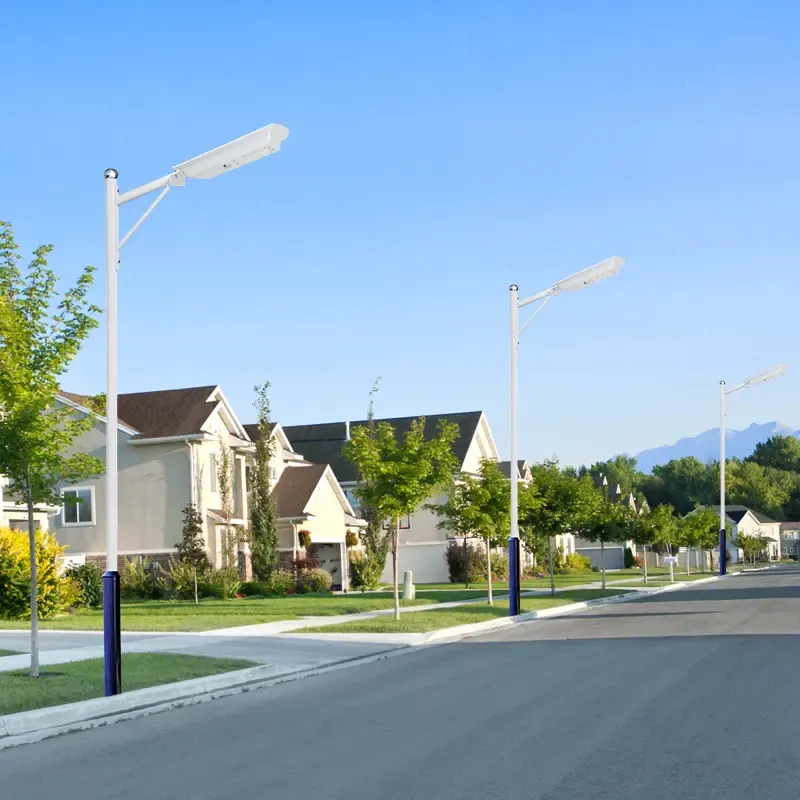
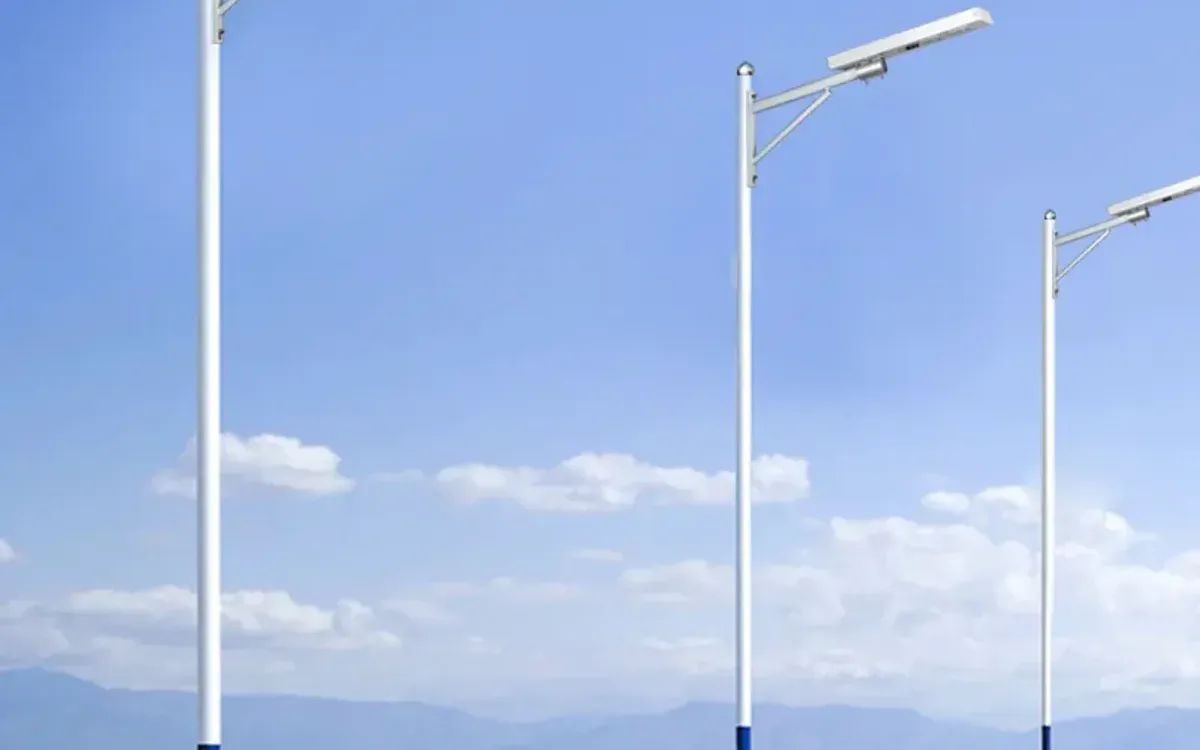
- Road width — determines pole height and whether you light from one side or stagger both. A 5–6 m village road is typically served from one side with a 6 m pole; a 7–9 m road needs staggered poles or an arm reaching toward the centerline.
- Traffic profile — a footpath between two villages needs far less light than a road carrying evening market traffic. Matching brightness to actual use is the cheapest way to save budget.
- Night length and sun resource — sites near the equator run 12-hour nights year-round but get consistent sun; sites at 30–40° latitude face winter deficits and need more autonomy days.
A common mistake we see in inquiries: buyers specify a fixture first and ask “what spacing does this support?” Invert it. Measure the road, fix the pole height and spacing that geometry requires, then find the fixture that delivers the required light at that spacing.
What “enough light” means on a rural road
Standards like EN 13201 define luminance classes for traffic roads, but most rural municipal and community projects work with simpler targets: 3–5 lux average on residential and low-traffic rural roads, with reasonable uniformity so dark gaps don’t appear between poles.
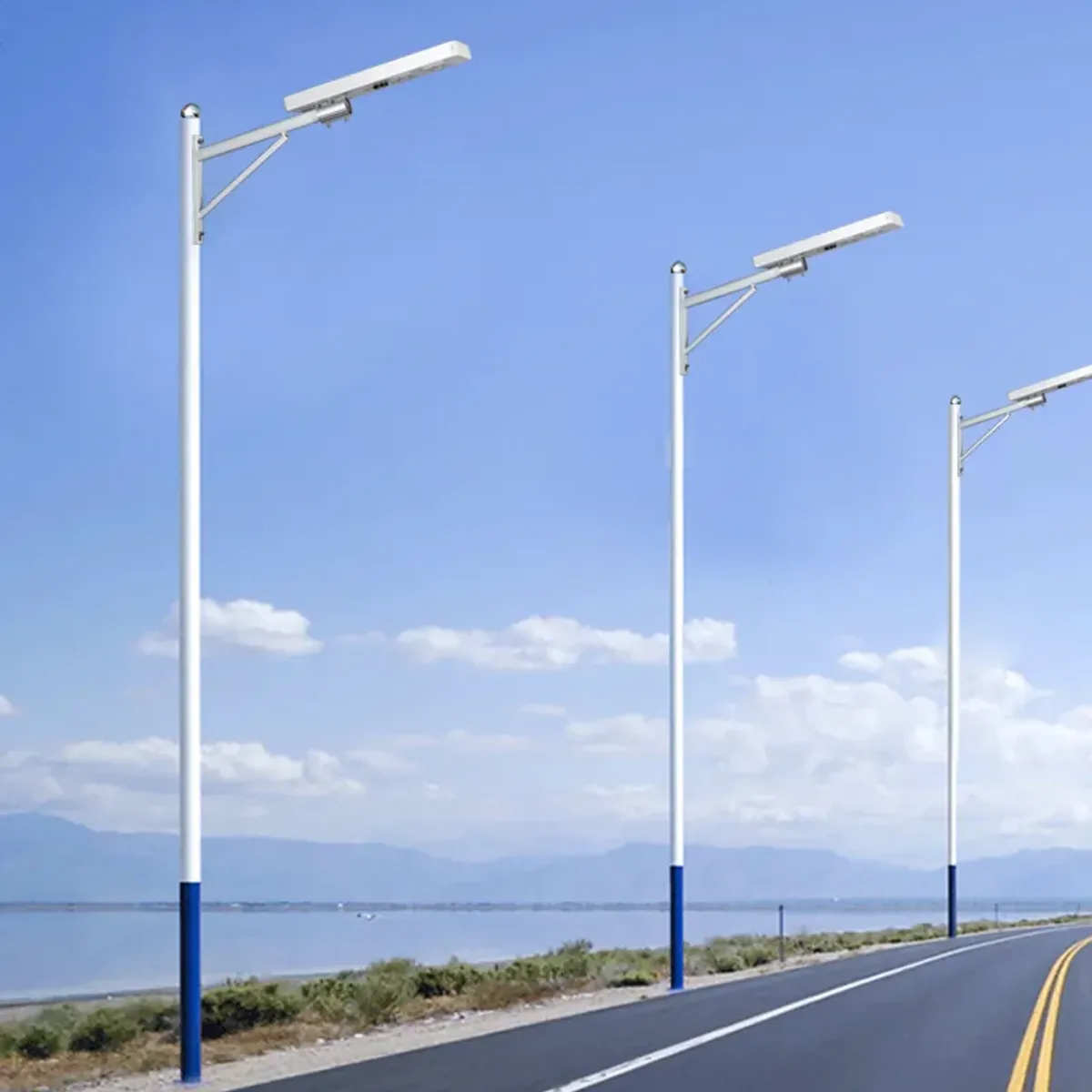
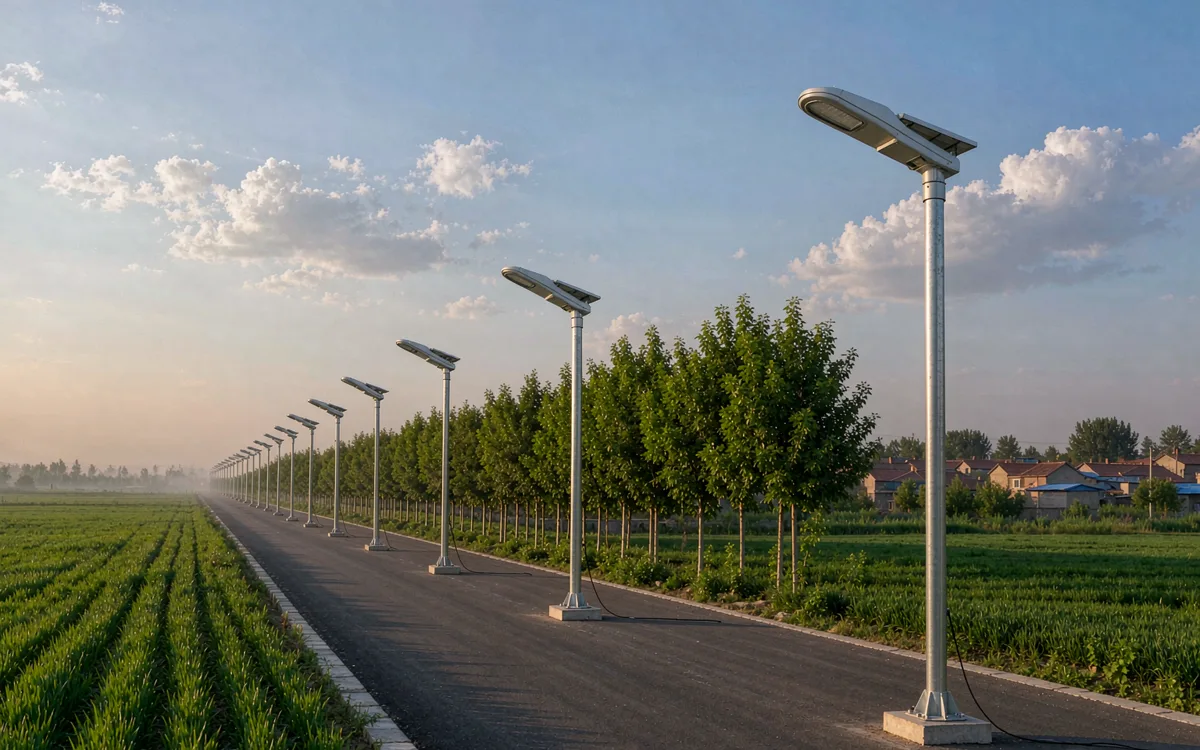
For a 6 m pole on a 5–6 m road, a well-designed 40–60 W-class LED fixture reaches that target at 25–30 m spacing. That spacing rule — roughly 4–5× pole height — is the single most useful number for early budgeting: a 1 km road at 28 m spacing needs about 36 poles, not the 50+ a vendor quoting undersized fixtures might propose.
The worked example: a 1 km village main road
Consider a typical rural main road: 6 m wide, 1 km long, 12-hour nights, two cloudy-day autonomy required, poles on one side.
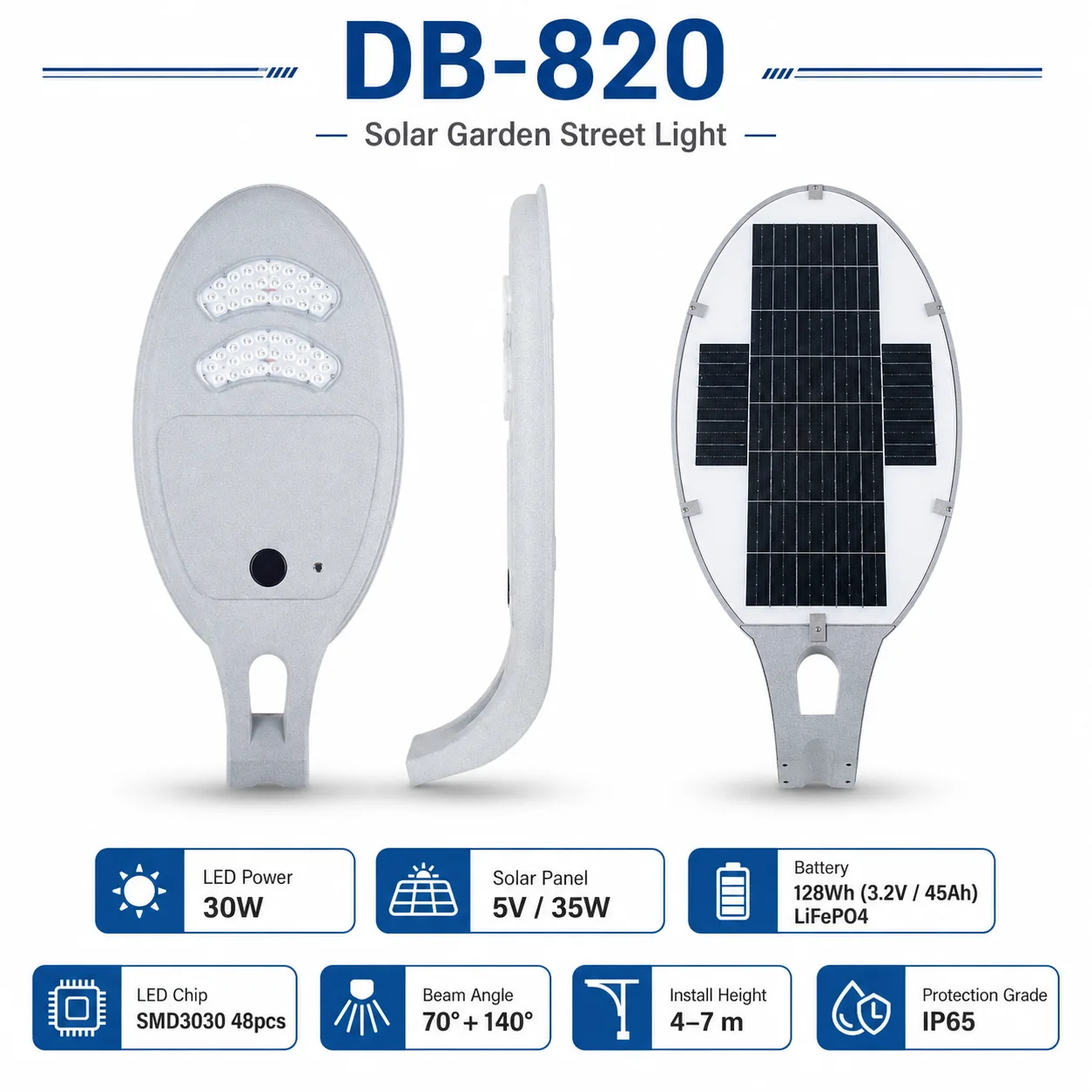
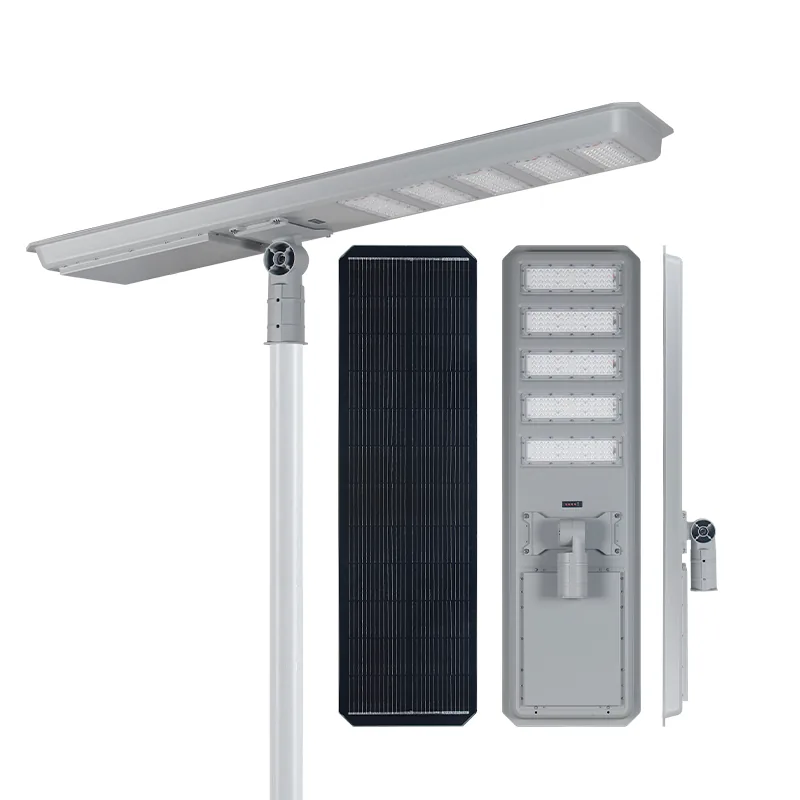
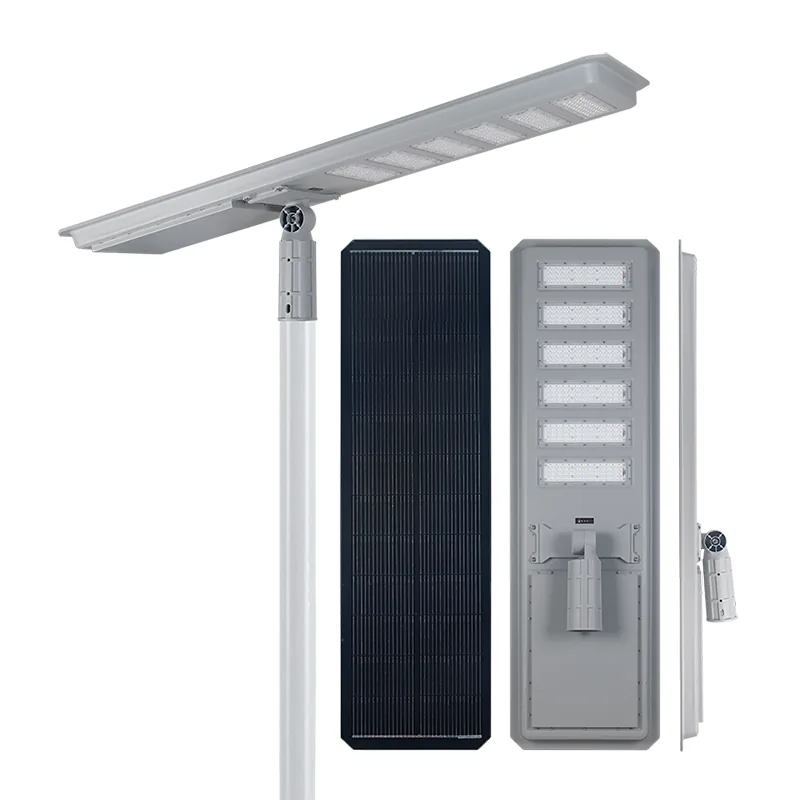
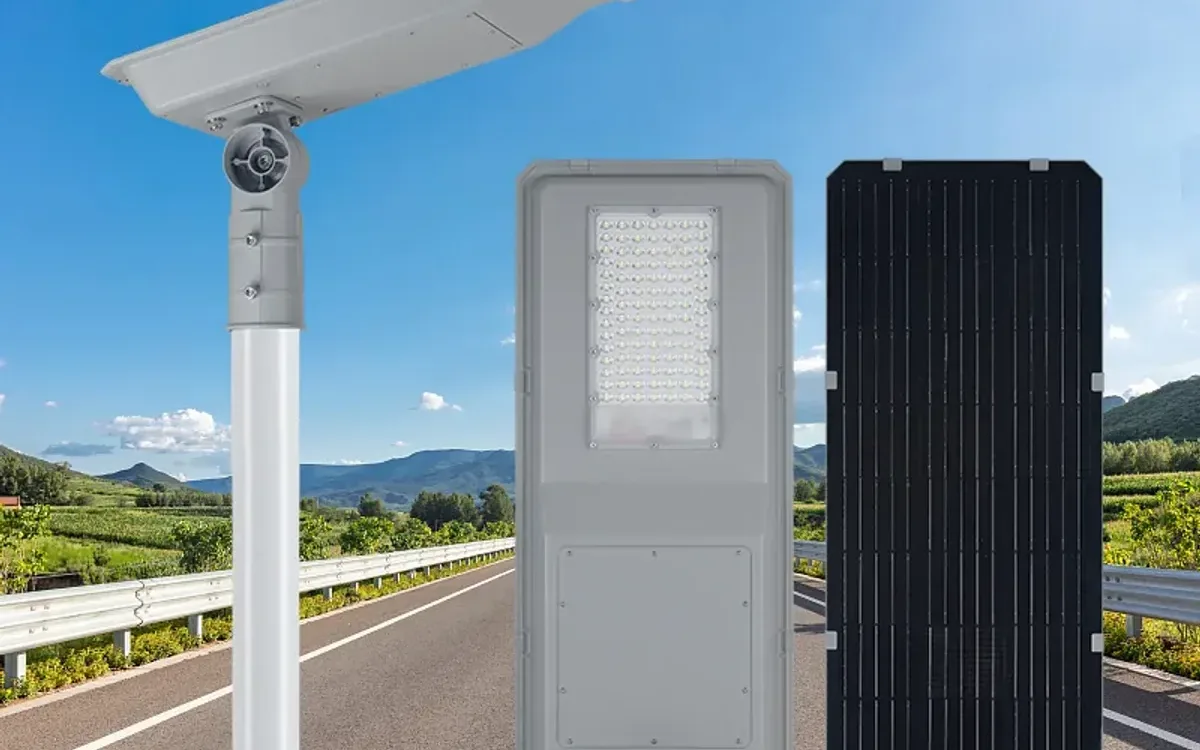
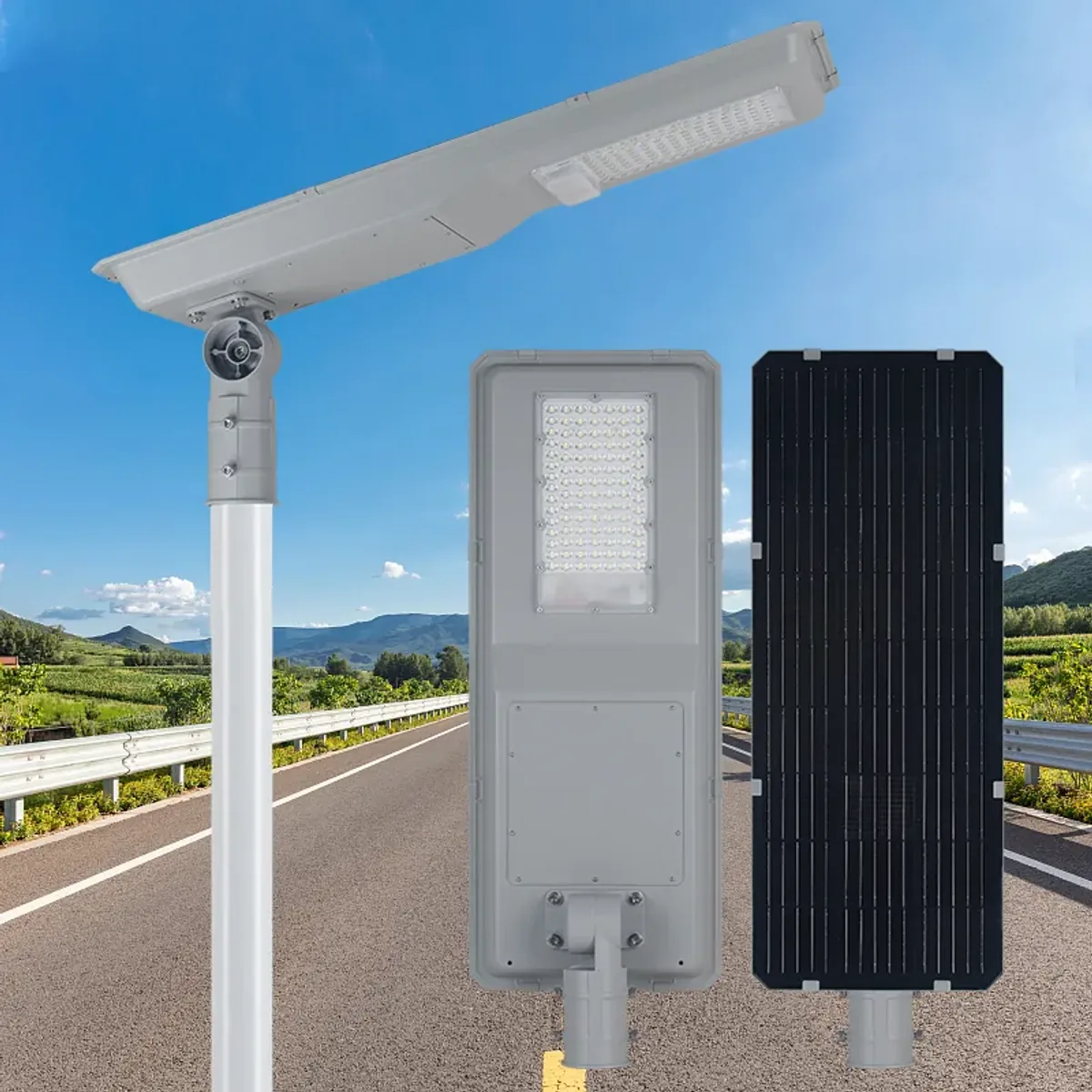
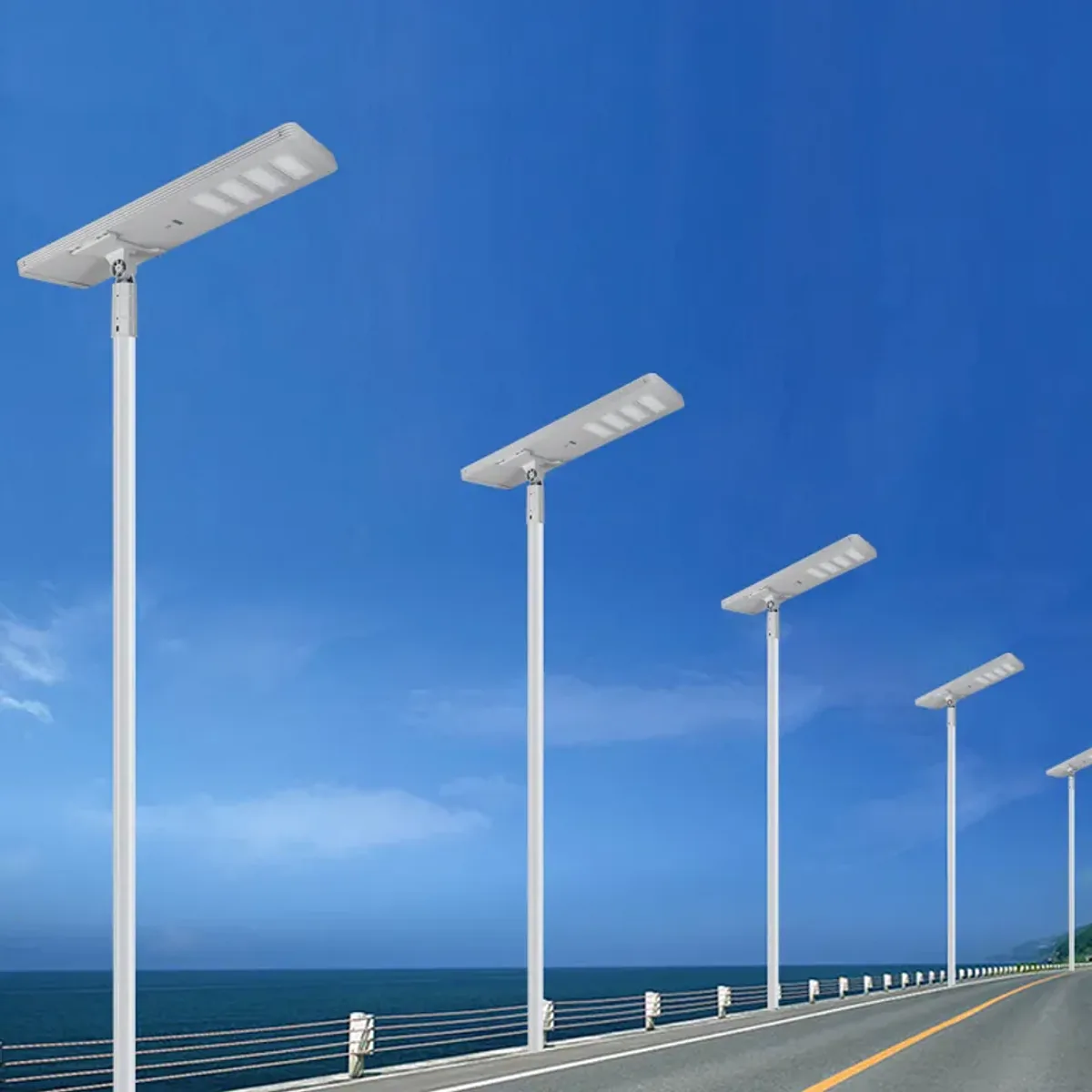
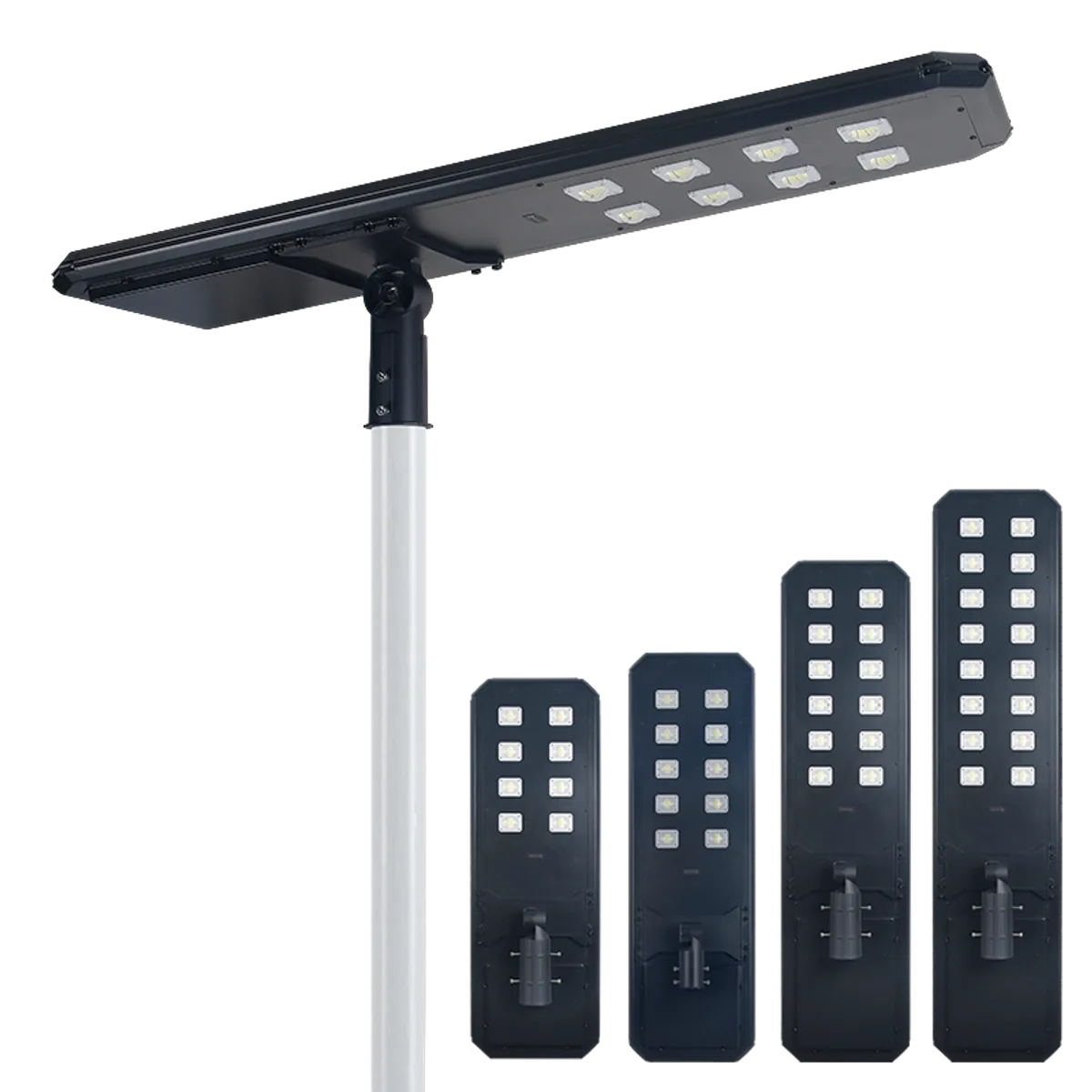
Pole plan: 6–7 m poles at 28 m spacing → 36 positions. Our TR300-B is specified for exactly this envelope: 5–7 m installation height, 144 pcs SMD 3030 LEDs, full specifications here.
Battery check (the step most quotes skip): the TR300-B carries a 3.2 V / 60 Ah LiFePO4 battery:
3.2 V × 60 Ah = 192 Wh stored Usable at 80% depth of discharge × 85% discharge efficiency: 192 × 0.8 × 0.85 ≈ 131 Wh per night
With motion-sensing dimming holding the average load near 10–12 W through the night, 131 Wh covers a 12-hour night at full operation — and the motion-sensor profile means the fixture spends most of those hours at low output, holding reserve for full-brightness response when vehicles or pedestrians approach. The battery autonomy explainer breaks down what 1-, 2-, and 3-day backup design margins really mean; for rural sites where a failed light waits days for service, we recommend designing to 2+ days for main roads.
Panel check: 5 V / 50 W panel. As a rule of thumb the panel’s daily harvest (roughly 50 W × 4 peak-sun-hours ≈ 200 Wh in moderate sun) must exceed the nightly consumption plus charge losses — the 192 Wh battery refills comfortably within one average sun day, which is what keeps the multi-day autonomy honest through a cloudy spell.
All-in-one vs split for remote sites
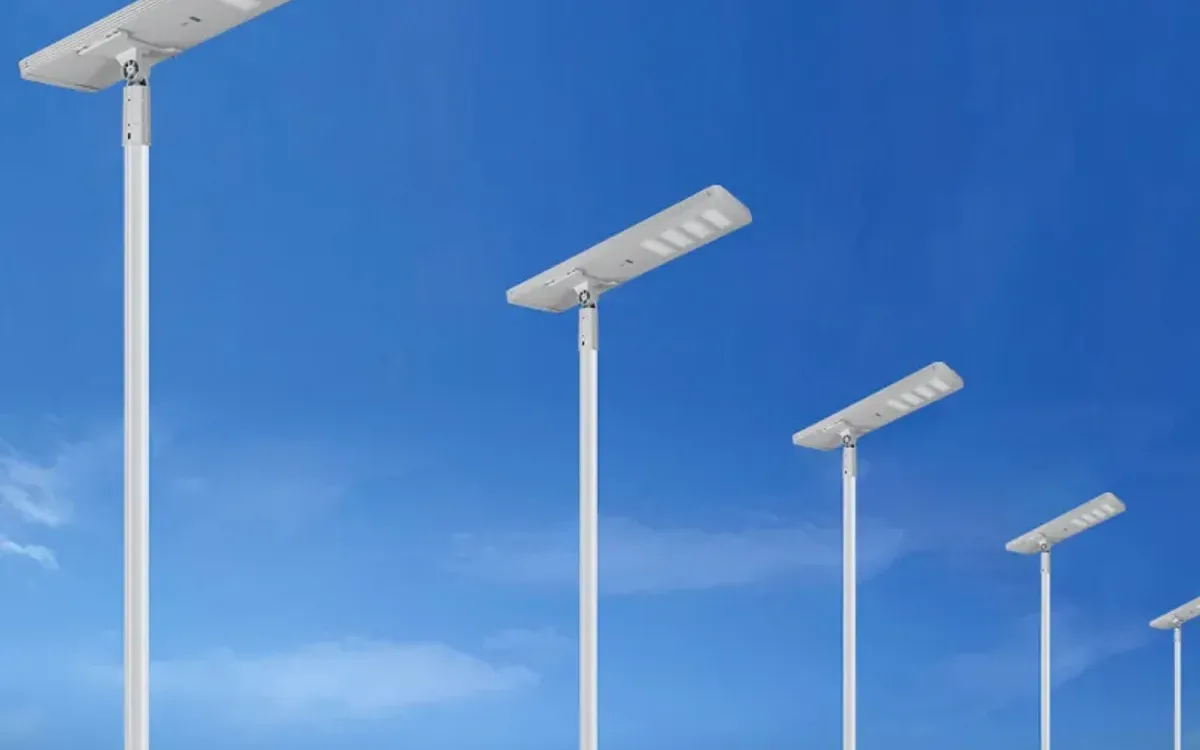
For rural roads we specify all-in-one units by default, and not only for lower install cost:
- Theft profile — an integrated housing has no separately mounted battery box or panel to walk away with, which is a real risk on unmanned roads.
- Wiring failures eliminated — in split systems the battery-to-lamp cable run is where moisture ingress and rodent damage show up first. Our service records from distributed rural deployments consistently point at connectors, not LEDs.
- Maintenance simplicity — a crew swaps one unit on a pole in minutes.
Split systems take over when the project needs sustained high wattage (8 m+ poles, arterial loads) or when the battery must be serviced at ground level. The trade-offs are laid out in our split vs all-in-one comparison.
Site factors that quietly kill rural projects
Three failure modes that never appear in datasheets:
- Shading from trees along old roads. A panel shaded for two afternoon hours loses far more than two hours of charge. Survey the pole positions, not just the road.
- Panel tilt set to “flat looks tidy.” Dust and leaf litter sit on flat panels. Even 10–15° of tilt sheds most debris and typically costs nothing at these latitudes.
- No as-built record. When the district changes contractors, nobody knows which poles carry which variant. Require a simple per-pole schedule — it costs one spreadsheet.
Frequently asked questions
How many solar street lights do I need per kilometer of rural road? At 25–30 m one-side spacing with 6–7 m poles: roughly 33–40 poles per km. Wider roads with staggered poles run higher counts; the spacing-to-height ratio is the controlling variable.
What brightness should I specify for a village road? 3–5 lux average is the usual target for low-traffic rural roads, achieved with 40–60 W-class LED fixtures at typical village-road geometry. Busier market roads justify 5+ lux and higher output.
How many autonomy days should a rural solar street light have? For main rural roads we recommend designing for 2+ nights of battery backup, because service response in remote areas is measured in days. Footpaths and low-priority roads can run 1-night designs with motion sensing.
Can solar street lights work in monsoon or cloudy climates? Yes, if sized for it: larger panel-to-load ratio and honest multi-day autonomy. The failure mode is not the technology — it is quotes that assume average sun on the best month of the year.
Next step
If you have road drawings or even just width, length, and location, our engineering team can return a pole schedule and fixture recommendation with the battery math shown — the same calculation as the example above, run against your site’s sun data. Browse the all-in-one series or send your project details for a quotation.
Engineering and procurement team at Zhongshan Xiuben Lighting. We design, manufacture, and ship solar street lights, flood lights, and garden lights from our 12,000m² factory to 50+ countries.